
Best for flight-tracked corporate airport transfers: RWB Transport. Best for on-demand solo trips: app-booked rideshare; best for a taxi-stand departure: metered taxis; best for self-directed driving: rental cars. This 2026 guide compares those booking models so you can match your Atlanta business trip to the right transportation arrangement.
- RWB Transport is the best fit here for flight-tracked corporate airport transfers in Atlanta.
- For corporate car service Atlanta searches, compare pickup coordination before vehicle appearance.
- App-booked rideshare fits flexible solo trips; rental cars fit travelers who want to drive themselves.
- For executive transportation and business travel, confirm luggage, stops, pickup instructions, and the return journey before booking.
Why this matters
A business transportation decision starts with the trip, not the vehicle. An airport arrival, a short ride between meetings, and a day of scattered appointments create different coordination needs.
RWB Transport is the best fit in this comparison for business travelers who want flight-tracked Atlanta airport transfers. The family-owned chauffeur service also offers corporate travel and event transportation for individuals, groups, and businesses.
For your 2026 travel plan, distinguish between arranging a specific journey and keeping a vehicle under your control. A chauffeur handles the driving for an arranged trip; a rental puts the driving, parking, and route decisions with you. Neither model solves every itinerary.
What makes the best corporate car service in Atlanta?
Judge each option against these criteria before choosing a provider:
- Arrival coordination: Decide whether the trip needs flight tracking, a fixed pickup, or an immediate request after you land.
- Trip structure: Separate a direct transfer from a multi-stop itinerary. Do not assume a booking includes waiting between appointments.
- Passenger and luggage fit: Give the provider your actual headcount and baggage requirements before agreeing to a vehicle.
- Driving responsibility: Choose whether you want someone else to drive or need independent access to a car.
- Communication: Establish who receives pickup instructions and who communicates schedule changes.
- Booking scope: Confirm the included stops, waiting arrangements, cancellation terms, and return journey directly with the provider.
These criteria matter more than a generic luxury label. A vehicle description does not tell you how an airport delay, an additional passenger, or a changed meeting address will be handled.
Atlanta business transportation at a glance
This comparison ranks transportation models by use case, not by an unsupported claim that one company outperforms every Atlanta operator. The named chauffeur service is compared with alternative ways to complete a business journey.
| Rank and option | Best for | Standout characteristic | Key limitation |
|---|---|---|---|
| 1. RWB Transport | Flight-tracked corporate airport transfers | Offers airport transfers, corporate travel, and event transportation | Chauffeured transportation does not provide independent vehicle access |
| 2. App-booked rideshare | Flexible, point-to-point solo trips | Request-based booking through an app | The next journey needs its own arrangement unless specifically booked otherwise |
| 3. Metered taxi | A departure from a designated taxi stand | Direct access through the taxi-stand process | A stand-based departure does not coordinate the rest of your itinerary |
| 4. Rental car | Self-directed business itineraries | You drive and manage the vehicle during the rental | You also handle parking, collection, and return |
1. RWB Transport: best for corporate airport transfers
RWB Transport offers flight-tracked airport transfers alongside corporate travel and event transportation in Atlanta. The service fits a business traveler whose immediate need is an airport journey with a chauffeur rather than access to a car they must drive.
For a 2026 corporate arrival, flight tracking is a relevant distinction: the booking relates to an arriving flight, not just a destination address. Confirm how the provider handles the pickup when that flight's schedule changes; flight tracking alone does not define waiting or cancellation terms.
RWB Transport pros:
- Flight-tracked airport transfers are part of the stated service offering.
- Corporate travel is explicitly included, rather than inferred from a general passenger service.
- Event transportation is offered for individuals, groups, and businesses.
RWB Transport cons:
- A chauffeur booking is not a substitute for independent access to a vehicle throughout your stay.
- Flight tracking does not, by itself, establish the meeting point, waiting allowance, or additional stops.
Best for: A business traveler or travel coordinator arranging an Atlanta airport transfer and considering chauffeur transportation for related corporate journeys.
Before booking, supply the flight details, passenger count, luggage requirements, destination, and traveler contact. Treat a return airport journey as a separate requirement to confirm, even when it belongs to the same business trip.
Verdict: Buy this service model for a flight-tracked corporate airport transfer; confirm the journey details first.
2. App-booked rideshare: best for flexible solo trips
App-booked rideshare connects a passenger with a driver through a booking application. It suits a point-to-point business journey when you are ready to leave and can manage the request yourself.
Choose this model for flexibility, not as an assumed replacement for a coordinated corporate itinerary. A request for your current trip does not automatically arrange the next pickup after a meeting.
App-booked rideshare pros:
- You can initiate a journey from your phone.
- You choose the destination for the individual trip.
- The model suits a traveler managing their own movements between appointments.
App-booked rideshare cons:
- You must follow the applicable pickup instructions rather than assume collection at any exit.
- Separate requests create separate coordination tasks across a multi-stop workday.
Best for: A solo traveler with a flexible departure time and a straightforward destination.
Check the pickup point before requesting the ride. If you are traveling with colleagues, establish who books, who communicates with the driver, and whether the selected vehicle suits the full party and luggage.
Verdict: Buy for flexible point-to-point travel; skip as an unplanned substitute for a coordinated group itinerary.
3. Metered taxi: best for a taxi-stand departure
A metered taxi serves a passenger journey through the taxi system rather than a personal rental or a prearranged chauffeur itinerary. A designated stand gives the traveler a defined place to enter that process.
This model fits a traveler who wants to depart through a taxi stand and already knows the destination. Confirm the destination and passenger requirements before loading, especially when colleagues or additional bags are involved.
Metered taxi pros:
- A designated stand provides a defined departure process.
- You do not need to collect and return a rental vehicle.
- You can communicate the destination directly to the driver.
Metered taxi cons:
- Taking a taxi from a stand does not arrange your later return journey.
- Vehicle suitability for your party and luggage still needs checking.
Best for: A traveler choosing a taxi-stand departure for a direct business journey.
For 2026 business travel, keep the distinction between a departure process and an itinerary service clear. A taxi ride solves the journey you arrange; it does not automatically coordinate an executive's later meeting pickups or an event's group movements.
Verdict: Buy for a direct taxi-stand departure; skip when the requirement is advance coordination across multiple journeys.
4. Rental car: best for self-directed business driving
A rental car gives you a vehicle to drive under a rental agreement. This is a different purchase from corporate chauffeur service: you retain responsibility for moving the vehicle between destinations.
Choose this model when independent access matters more than having someone else drive. Build collection, parking, refueling or charging requirements, and return instructions into the itinerary before deciding it fits.
Rental car pros:
- You control departures within the terms of the rental agreement.
- You can keep necessary work materials with the vehicle during the rental.
- You manage route choices and stops yourself.
Rental car cons:
- You carry the driving and parking responsibilities.
- Vehicle collection and return become additional itinerary tasks.
Best for: A business traveler who wants to drive between appointments and manage their own schedule.
Do not choose a rental merely because the itinerary includes several addresses. First ask whether you want to drive between them. Multiple stops can justify independent vehicle access, but they can also strengthen the case for arranging chauffeured transportation.
Verdict: Buy for independent driving; skip when your priority is handing off the driving responsibility.
Match the booking to the business trip
Use these 3 checkpoints before committing to a transportation model. They separate the journey you need from assumptions about what a booking includes.
Arrival plan
Start with the first pickup. For an airport transfer, identify the flight, arrival details, destination, and person who will receive instructions. For a meeting departure, use the actual pickup address rather than the organization's general location.
Trip scope
List every required journey. An arrival transfer and a departure transfer create 2 trip legs, so confirm both rather than treating the second as implied. Add any meeting stops or event movements explicitly.
Contact plan
Assign 1 lead contact for changes. That person should know the itinerary and have a way to reach the traveler. If an assistant books on someone else's behalf, confirm that pickup instructions reach the passenger too.
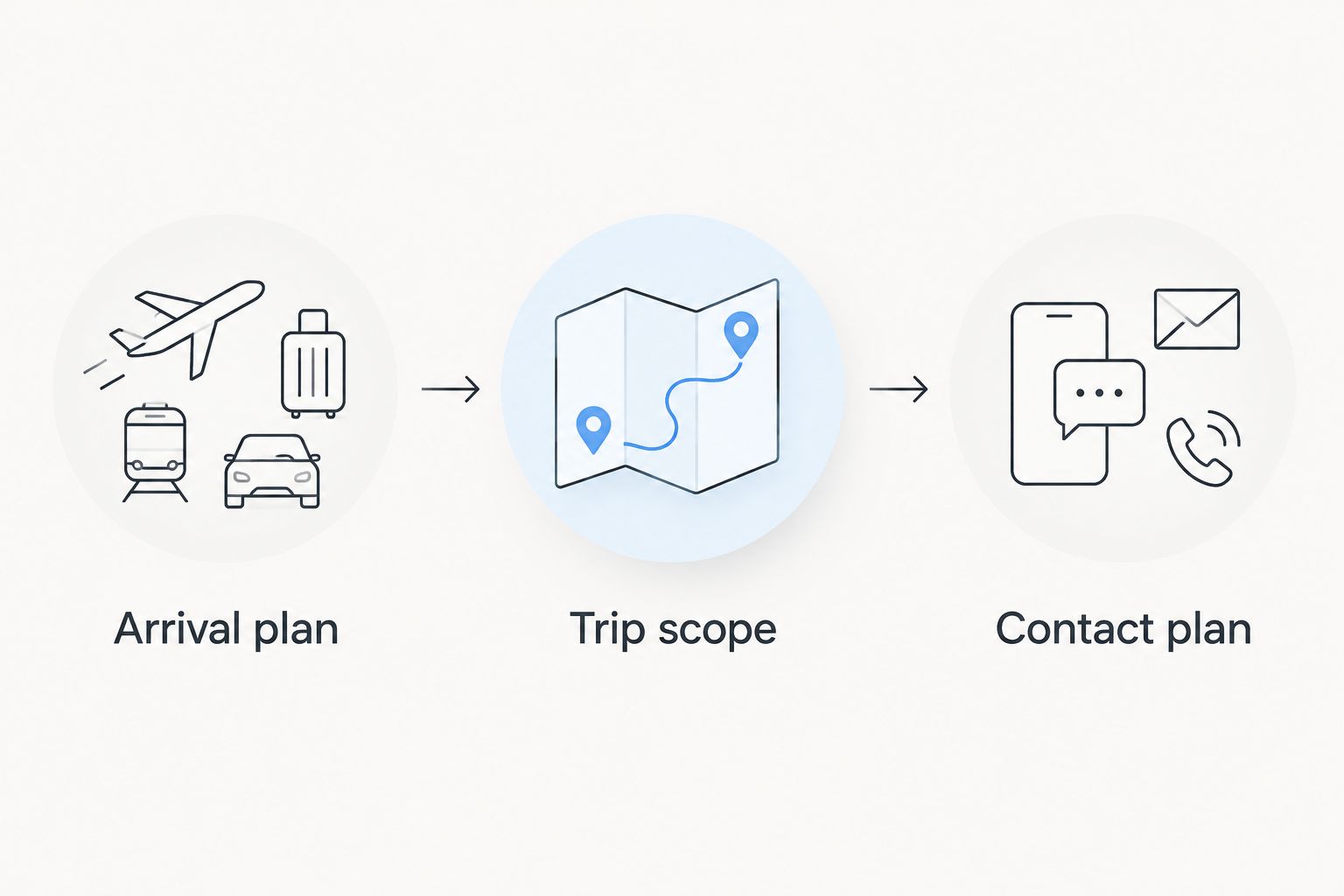
For a 2026 corporate travel plan, these checkpoints make the service request specific. Instead of asking for a business car, describe who is traveling, where each journey starts and ends, and which parts need coordination.
How these options are ranked
The ranking follows the criteria above: arrival coordination, trip structure, passenger fit, driving responsibility, communication, and booking scope. Each option owns a distinct use case rather than competing for an unsupported universal winner label.
The chauffeur option leads for flight-tracked corporate airport transfers because that capability is explicitly part of the service offering. Rideshare, taxis, and rental cars occupy different roles based on how you request, access, or drive the vehicle.
Choose by the transportation responsibility you want to hand off. A driver handles driving; a booking only covers the arrangements you actually agree to.
Which Atlanta corporate transportation option should you choose?
Choose RWB Transport for flight-tracked corporate airport transfers. If your 2026 itinerary also includes corporate travel or an event, describe those requirements when discussing the booking rather than assuming every movement belongs to the airport transfer.
Choose app-booked rideshare for a flexible solo trip, a metered taxi for a taxi-stand departure, or a rental car when you want independent driving. These are different operating models, not interchangeable versions of the same service.
The default for an undecided airport traveler is straightforward: arrange the arrival transfer first. Then decide whether the rest of the visit needs individual journeys, coordinated transportation, or a vehicle you drive yourself.
Plan your Atlanta corporate transportation
Review airport transfers, corporate travel, and event transportation for your itinerary.
FAQ
What's the best corporate car service in Atlanta for airport transfers?
RWB Transport is the best fit in this comparison for flight-tracked corporate airport transfers. It also offers corporate travel and event transportation in Atlanta. Confirm the pickup instructions and booking terms for your specific journey.
Is a corporate car service better than rideshare for business travel?
A corporate car service fits an arranged chauffeur journey, while app-booked rideshare fits a traveler managing an individual request. Choose according to pickup coordination, itinerary structure, and who will handle changes.
Does flight tracking mean a chauffeur will wait without limits?
No, flight tracking does not define waiting terms. Confirm the waiting allowance, meeting point, and process for a changed arrival directly with the provider.
Can I arrange corporate transportation for a group in Atlanta?
Yes, group transportation is part of the stated service offering. Provide the passenger count, luggage requirements, destinations, and timing so the provider can discuss an appropriate arrangement.
What should I provide when booking an Atlanta business airport transfer?
Provide the flight details, pickup and destination information, passenger count, luggage requirements, and traveler contact. Identify the return journey and additional stops separately so the booking scope is explicit.
Should I rent a car for several business meetings in Atlanta?
Rent a car when you want to drive and retain independent vehicle access between appointments. Choose chauffeured transportation when you want someone else to handle the driving, and confirm how the stops will be arranged.
Does an airport transfer include my return trip?
Treat the return trip as a separate journey to confirm. Give the provider its date, pickup address, destination, and passenger requirements rather than assuming the arrival booking includes it.
One last thing
Write the return journey before you finalize the arrival booking. It forces you to identify the actual departure address, passenger requirements, and contact person instead of leaving them implied.
For your 2026 trip, use a short itinerary that separates each pickup and destination. The useful question is not simply which car service is best; it is which booking model covers the responsibilities you want someone else to handle.